Nameka specializes in celebrating the athletic experience through academic and practitioner applications of the athlete experience. In an effort to have athletic voices more visible in society, my goal is to utilize this blog to share stories and ideas that enhance our "human" understanding of the athlete experience for myself and the world.
There is an old adage that “Those who can’t play,
coach”.Apparently, Black coach’s adage
should be “Those who can’t Head Coach, assistant coach” or better yet “Those
who Head Coach, can’t miss the playoffs or bowl games too many times or they
gonna get fired!
10 years ago the “Rooney Rule” and the “NCAA Racial
and Gender Report Card” was established to address the discriminatory practices
against Black head coaches and sport administrators.In 2002, Johnnie Cochrane and Associates
challenged the NFL to establish a rule that required teams to interview Black
head coaches when a position became available.Named the Fritz Pollard Alliance, Cochrane’s team forced the NFL to
establish a committee, chaired by Dan Rooney to evaluate the claims set forth
against them.The result of the
committee’s investigation established the Rooney Rule.Similarly on the collegiate level, sport activist
Richard Lapchick’s The Institute for Diversity and Ethics in Sport (TIDES)
supported by the Black Coaches Association and the NCAA began to study and
report on the racial and gender representation of black coaches and
administrators which can be found on the NCAA website.
If you want to read more about these reports and
their findings, please visit these websites:
The
Institute for Diversity and Ethics in Sports (TIDES)
When someone tells me that a Black head coach firing
is not about race, it is clear to me that many people are still blinded by the
belief that capitalism and racial inequity are mutually exclusive.This year alone we saw the firing of Head
Coaches Mike Brown, Avery Johnson, Lovie Smith, and Romeo Crennel (Damn…Coach
Crennel watched one of his players commit suicide and they still canned the
brotha…sheesh!).When the total of Black
head coaches in the NFL and NBA combined is 17 (12 of which have been hired
within the past 2 years), losing 4 Black head coaches is about nothing less
than race!It’s the reason why people
are critical of Black films, when you have minimal representation it does not
matter that other racial groups are being represented in the same way.In cases where one race is overrepresented
and another is underrepresented it matters how they perform, period!So, if race was not a consideration in the
firing of these men, I am arguing that it should have been and in fact was!
The fact
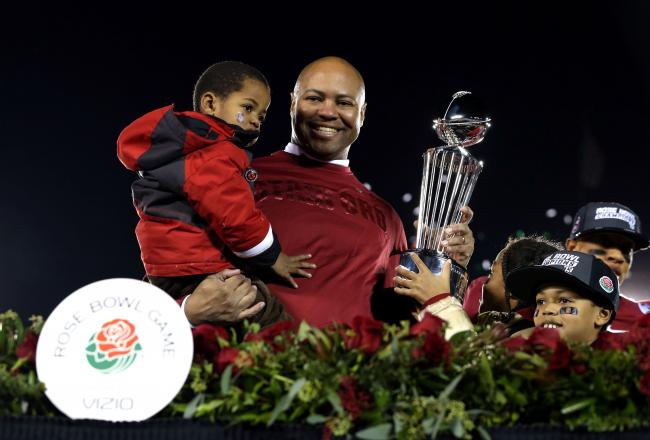
that we are celebrating the first time two Black head coaches winning BCS title
games (Davis Shaw, Stanford and Charlie Strong, Louisville) tells me that we
still have a long way to go.Why are
winning Black coaches a reflection of the need to hire more Black head coaches?Statistically, Black head coaches are more
successful than their white counterparts.The fact is, when Black head coaches are given the opportunity to coach,
they are successful, period!Consider
this reported by The 2012 Racial Report Card:
“Eight out of the last 12 Super
Bowl teams have had either an African-American head coach or general manager:
coaches Tony Dungy (Colts), Lovie Smith (Bears), Mike Tomlin (Steelers, twice)
and Jim Caldwell (Colts) and GMs Jerry Reese (Giants, twice) and Rod Graves
(Cardinals).”
Full disclosure, while I was disappointed to see
Lovie Smith fired by the Bears, I was glad to see Coach Frazier be successful
in Minnesota.Coach Frazier is one of
the most genuine people I met while employed with the Illinois Football
Program.I mentored his son who
demonstrated a level of respect, determination, and genuine kindness that was
clearly inherited and guided from his father.I want to see Coach Frazier do well, not only because he is a great
Black coach but because he is a great Black man and role model!He is my real life Tony Dungy!But that’s another blog!
The Black head coaching situation is a classic case
of what I have termed Blaxspectation.You all have heard me refer to this before,
but those who are reading my blog for the first time, watch the video below as
Chris Rock explains it best!
Chris Rock on his home in New Jersey
Simply put, the reason it is always about race when
Black coaches are concerned is because it is!
The
ESPN 30 for 30 Film entitled “Broke” aired tonight, ironically the same day TMZ
reported that Michael Vick has spent $29 million dollars since filing for bankruptcy
in 2008.Most of Vick’s money is being
spent paying back the debt he incurred from the dog fighting case, but his
reality is like many of the athletes featured in the film.My friends probably think I might consider
utilizing this film in my class because 30 for 30 films are currently
integrated into my course curriculum, but not this film.This film will be more useful to me when I am
facilitating player development with teams or individual athletes.There are 30 for 30 films that are useful in
my class because they address some of the broad topics we cover in sport
sociology but others that are designed to speak to individuals.This is that film.
As
stated in the film, “that’s not going to be me” is the detrimental mentality
that makes some players great athletes but leave most left by the wayside.As a sport sociologist and aspiring player
development specialist, I believe that my job is to offer players the
alternative perspective to what “not going to be them” looks like.What I know for sure, is that you are not
going to convince an athlete that there is a possibility they might not make it
to the league, or that they could be filing bankruptcy after their first year
in their respective sport.In a world
that convinces these young men and women that they are superhuman, anyone who
comes along and tells them any different will for sure be overshadowed.So, I agree, “that’s not going to be you” and
this is how we are going to make sure that it’s not.
The
NFL and NBA both host rookie symposiums in hopes to prepare these players for “life”
in the professional league.I am sorry
to say that these programs are ineffective mostly because it is simply too
late.Once they sign those contracts I believe
invisible ear plugs form and all reason is blinded by the cars, big houses, and
jewelry.Half the money these young men
are going to make has already been spent before they even make it to the rookie
symposium.I mean, think about how the
average person manages their money.I am
sure that you have said at one point or another, “that paycheck is already
spent”.I think the reason players are
not prepared for the professional life prior to rookie symposiums is the detrimental
philosophy of athletic and academic institutions that we should not prepare for
the unknown.This means, we do not want
to have a professional athletics major because it is not considered a
career.I hope films like this will
start people considering the necessity for a professional athletics major.Worst case scenario, if they do not achieve a
professional athletic career at least they are well educated in the areas of
business, financial management, sociology, and many other important areas of
life.I will save my campaign for a
major in professional athletics for another blog.
I
continue to stand behind the belief that the same pitfalls that professional
athletes face with being millionaires is simply amplified compared to many
others who make the same mistakes.I
actually believe that it is possible for professional athletes to support their
friends and families, make investments, and experience the finer things in
life.The way to make this happen is to
first accept the fact that these things are going to occur.How are you going to tell a professional athlete
he cannot buy a house for his/her parents?I know when I start making money it is going to be my first major
purchase.The goal is to sit down with
them and budget their desired purchases with them.The real problem is that these athletes are
not a part of the financial planning process as it is taking place.I believe this problem would improve significantly
if a player is allowed to consider desired purchases with a more hands on
approach as opposed to the hands off system or simply being told you cannot
help your friends and family.
This
film did a great job of covering the variety of ways that professional athletes
are left broke after their athletic career.I hear too often the blame being placed on friends and families who are
taking advantage of these young men.I
hope that most viewers will not focus their attention on the portion that reinforces
this narrative about “groupies”, baby mamas, and ex-wife “gold-diggers”.For me, this film was about choices and as an
undergraduate college mate of mine presented to me, sometimes “choiceless
choices”.At the end of the day, we
cannot just watch these films and hold them totally responsible or blame the
people they associate with.Well we
could, but I chose to consider ways that we can help these young men be
productive members of society.Not
waiting until it’s too late before we begin to educate them about the wonderful
and detrimental experiences that playing in the professional league can bring
should be our goal.Starting with
college athletes would be a good change but teaching your sons and daughters
would yield greater results.
Finally,
I want to draw your attention to the fact that this film was completely focused
on male athletes.While there are
several female professional athletes who face financial challenges, we have to
recognize their story is a completely separate conversation.The income disparities that exist in
professional sports are consistent with those in the broader society.A conversation about women and “Broke” would
probably look like a very different film.
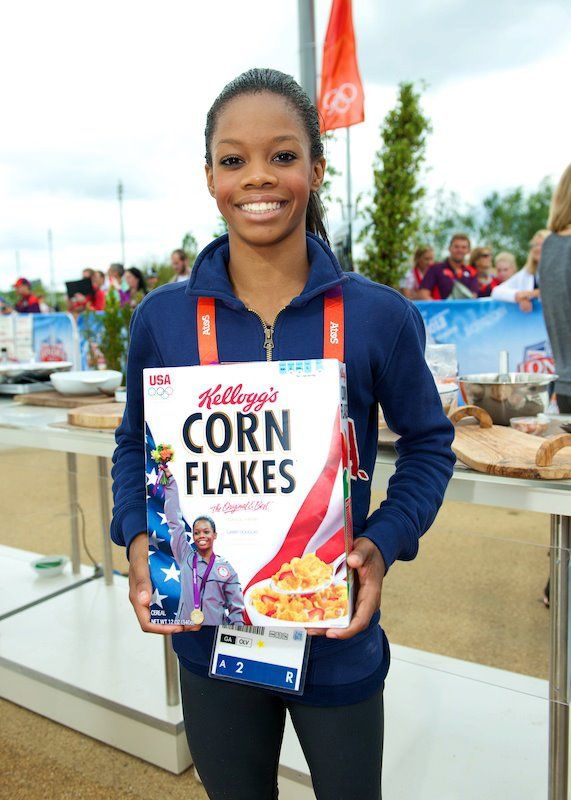
Wow! Can you believe the London Olympics are over already? I must admit, with all the broadcasting issues I have not enjoyed this Olympics as I have in the past. I am actually glad that it is over. Now I can go back to checking my Twitter and Instagram without fear that someone might announce the results before its broadcast. Thanks NBC!! Besides, football season is starting so I am good to get my sport fix. But I do want to take this opportunity to offer my analysis of one of the hottest topics of these Olympic games. 2-Time Olympic Gold Medalist Gabrielle (Gabby) Douglas.
Gabby Douglas shocked the world when she became the
first American gymnast to win the gold medal in both the all-around and team
competition. Apparently, based on the twitter commentary, most supporters had
completely missed the fact that she was African American.Most dismissed the significance of race and
claimed to be focused on the celebration of an American winning the all-around
three years in a row.Many remarked that
they were proud of Gabby because she was an American and did not even see her
as a black girl who had won the medals.This
dismissal was spurred by the post win commentary shared by NBC Sports
Journalist, Bob Costas.Many were angry
that Costas placed a focus on race as he shared what he considered to be a
historic moment.Costas clearly
believes that Gabby Douglas’ race matters as her story is written into American
history, and so do I!
I tweeted a few weeks ago, “Whenever someone says, I don’t see race I give
it the same reaction that I do when someone says but.Anytime that you say after holds zero significance.”There were many disconcerting things Costas
shared during his commentary.Not to my
surprise, are people choosing to focus on his mention of race.Americans continue to aspire for a post racial society.If we accept that we live in a post racial society, then Costas belief
that “gymnastics is a sport free of racial barriers” and the aged old belief that “Michael
Jordan transcends race” would actually be true.If there is any sport in American society, next to Golf, that maintains
racial barriers its gymnastics. There are few sports that match the sacrifices
necessary to compete on the elite level.If we measured these sports based on financial constraints, family
commitment, practice time, competition level, and career longevity, the sport
of gymnastics will definitely rank at the top of the list.These facts are what place Gabby’s win in a
space that centers on race in sports.Much attention has been placed on Gabby’s sacrifice to leave her home in
Virginia, but little attention has been placed on the Iowa host family.Is this because the family is Caucasian and
might draw more attention to the racial complexities?In reality, her host family does play a role
in Gabby’s narrative and should be recognized for the sacrifices they have made
in giving her this opportunity.
It seems that people are surprised that we are still talking about “Black
Firsts” in sports in this imagined “post-racial society”.WHAT?!?I was not shocked but extremely satisfied. The constant media
attention placed on the hopes that Jordan Weiber would be the “Golden Girl” put
me on Team Gabby from the start.After
winning the automatic spot in the Olympic Trials, Gabby’s win was dismissed as
an “off day” for Jordan Wieber.Even after
Jordan did not qualify for the All-Around competition, the media did not divert
its attention toward the two young women who defeated this Olympic hurdle. As
if they were morning the loss of Jordan in the All-Around competition, they
commented on her absence on several occasions.So, I was very happy that Gabby had the ability to prove everyone wrong
in a sport that maintains its exclusivity.And now that Gabby is done with her first Olympics, I pray that she
continues to receive the recognition that she rightfully deserves. I definitely hope to be one of the first to purchase her commemorative cereal box.
With every high, there is a low.I cannot
ignore the “Black girl hair” discourse that has consumed Black Twitter
commentary and the media.Most unsettling was watching
Starting Point with Soledad O’Brien
after Gabby won the All-Around Gold.I
usually enjoy her morning “Get Real” but this day instead of focusing on her
fellow journalist, Bob Costas’ inaccurate representation of equity in sports;
she chooses to fuel this discussion around Gabby's hair. First and foremost,
why she would feel it appropriate to have this discussion with an all-white
panel that has absolutely no idea about a Black woman's struggle with our hair
is beyond me!A more appropriate
discussion for the panel would be their perspective on the tweets and dissension with again her fellow journalist Bob Costas “playing the race
card”?Does Gabby’s race matter in her
accomplishments?Do people
really not see a Black girl when Gabby won?And if they don’t, why not, because a black
girl she certainly is!I suspect Soledad’s
intentions were good.I do not question
her frustration with the FEW members of the Black community who focused on Gabby's
hair rather than her accomplishment.I
did question Soledad's ability to offer a more informative response to a very critical
issue for Black women.
I suspect these women (girls/tweeters) who chose to draw attention to
Gabby's hair are probably the descendants of the girls who gave me hell after
my morning swim class. Another sport that has deep ties to racial exclusivity
and Black girls hair.Instead of
offering to help me fix my hair they stood in the hallway pointing and laughed
at my nappy hair style.I suspect Gabby
will prevail as I did, by learning how to do her own hair (or hiring someone
who can) in order to combat public opinion.Were the comments about Gabby’s hair appropriate after her win? Absolutely Not!The focus definitely should have been on her
accomplishments, especially from the Black community.However, is talking about how Black women and
girls struggle with hair and sport a real concern, it absolutely is.
Black girls’ hair is a significant constraint for sport participation.Do I believe that Gabby Douglas’ hair style
was not presentable for competition? I looked fine to me!Her hair was absolutely uniform with her
fellow competitors.Do I believe that
many women chose not to participate in sport, or even workout for that matter,
because of concern for how it will affect their hair style? Absolutely!The attention to hair is not new to sport
discourse.Serena and Venus can tell you
best about the challenges they faced with playing tennis and their hair.From the beginning, their beaded individual
braids claimed to have created significant distraction to their opponents and
were forced to change their hair style.It was not because the Venus sisters were more talented, their wins were
attributed to their “hair distraction”. Black girls just cannot win for losing.
This conversation about Black girls’ hair is another example of how sport is
a microcosm of American society.Black
women’s hair constraints in sport are indicative of the attention we get on a
daily basis.Whether we chose to wear a
natural hair style, weaved hair, or permed hair many of our encounters engage
the hair conversation at some point.It
is the reason India Arie wrote a song entitled “I Am Not My Hair” and Dr.
Melissa Harris-Perry chose to have an entire segment on her show about “The Politics
of Hair”.Black women’s hair has become
something much more complicated than it really should.Until little Black girls are raised to be confident
in their hair and believe “They are not their hair” or that they are, it is a core
aspect of self-esteem.The hair comments
that followed Gabby’s amazing accomplishment goes to show that especially
within our own community, it is an area that needs attention.
There are many aspects of Gabby’s accomplishment that deserves attention,
but I am sure that as Gabby continues to shock the world, there will be plenty
of opportunities for further discussion.I want to conclude this blog with my emotional moment.I too admired Dominique Dawes as a young
girl.The “privileged” communities may
never understand the impact that seeing ‘someone that looks like me’ has on
little black girls and boys academic, sport, and career aspirations.When Dawes’ emotions flowed during the post
win commentary, she reminded me of the challenges that Gabby faces. As if she had earned those metals herself, Dominique’s expression of pride for Gabby
gives you a sense of not only the barriers but power in knowing that she played
a role in showing Gabby that she could do it also.While I celebrate Gabby, I too celebrate Dominique
for what she did for Gabby and the world!Be sure to watch Dominique’s response and please leave your thoughts!
We have heard from the NCAA, Penn State university officials, the criminal
justice system, sports journalists,
political pundits, and twitter commentary.
Rare voices in this tragedy are current or former students, faculty, or
staff of the Penn State University community.
With the exception of the protests that occurred after Joe Paterno was
fired, the Penn State community has remained virtually silent on the heinous
acts that occurred on their campus. For
this reason, I fully support the NCAA imposing harsh sanctions on the football
program. Whether or not the NCAA is
appropriately situated in this tragedy is the least of my concerns. Ultimately, I am in support of any institution
that has the power to speak on behalf of those violated imposing sanctions. Joe Paterno, university officials, or even
the justice system certainly did not, so why would we trust them to do so
now.
The most pressing
argument against the sanctions is mostly due to the perceived hypocrisy of the NCAA
claiming jurisdiction on the moral and cultural issues of its member
institution. One could argue that the
NCAA’s commercialized culture of college sports is a direct contradiction to
the expectation that its member institutions place academics over profits. In my opinion, the sanctions were directly in
line with how the NCAA governs; money over the best interest of the
student-athletes. We are glad that the
student-athletes have an opportunity to transfer without penalty, however make
no mistake about it; many of these players will be left to live through the
aftermath of the sanctions imposed. Transferring
programs is not an easy task, and many of the less touted players will probably
be forced to remain at Penn State and endure this punishment. The NCAA being the wrong person to impose the
sanctions should have no correlation to whether or not the football program
deserved these sanctions to be placed on them.
If not the NCAA, who? The more
important question is what mechanisms are being put in place to help the
student-athletes cope with the reality of their new intercollegiate athletic
experience. Falling from grace is not an easy burden to bear!
When we talk about the culture of sports, the word that first comes to my mind
is "Loyalty". My alma mater even has a fight song that bears this
title. The problem with the culture of loyalty in sports is similar to
"When Keeping It Real Goes Wrong". The institution of sports has no
loyalty to its athletes or fans but socializes its audiences and players to be
loyal to sports. The fact is the capitalistic nature of sports is a serious
barrier for sporting institutions. A coach’s primary responsibility becomes
winning because he wants to keep his job so that he can feed his family. It's
survival of the “winningest”. The
evidence that this culture persists in the wake of the NCAA sanctions is the
concern that Paterno is not the only person punished by wins being vacated; the
athletes who played in those games are affected also. My concern is not with the general sense of
loyalty in sporting institutions, as it is more disconcerting that this loyalty
often leads to college cover-ups. In
these situations, no one wins.
In
the middle of this year’s season of “The Game”, a former college and current indoor football quarterback tweeted “I love The Game. This show is the closest I’ve seen to how it really
is in sports”. Since I am not a former
football player, I cannot dispute his claim about “The Game”. My concern about his tweet is that, if the
BET television series “The Game” is an accurate representation of life
situations that occur in the world of sports, or at least football, I have much
more to worry about than the academic success of Black male
athletes.
I have been a strong supporter of The
Game since its first show aired over 6 years ago. I
was excited to see a show that finally depicts the experiences of Black
athletes. My expectations were low, in
terms of whether or not the depiction would be “accurate” but high with hopes
that it would offer a positive representation of Black male athletes and their families. I could speak at length about the many
theoretical challenges I have had with the show over these six years, but I
chose to focus this blog on Season 5.
I believe that this series is at a
crossroads or has already hit a dead end.
Season 5 ends with an exit of the
main characters Derwin Davis (Pooch Hall) and Melanie Davis (Tia Mowry), a
happy ending for Jason Pitts (Coby Bell) and Tasha Mack (Wendy Raquel
Robinson), and a heart broken Malik Wright (Hosea Chanchez). This season has been most compelling for me
because of the hype surrounding the start of the season and directorial choices
that were made upon its return. Most
notably, the show previously aired on the WB but was cancelled after Season 4. After a public outcry over the shows cancellation,
BET made the decision to air reruns and the 5th season. However, due to the change, the show took a
two year hiatus before re-airing. The season premiere was heavily publicized and resulted in the show
registering millions of viewers, possibly the highest rated show of the BET
network. Despite the enthusiasm of its
return, many of the people who know I am a fan of the show told me that they
were immediately turned off and did not plan to
continue watching. This included my
mother who could not understand how her socially conscious daughter could be in
support of a show that in its season opener showed a white woman chastising a
black woman for being jealous of her whiteness.
Unfortunately, my attempt to explain my past support of the show even
sounded weak to me after watching the first episode of the season. However, I was determined to believe that the
direction of the show would all be understood, if I just gave it a chance.
Please bear with
me as I speak at length about Melanie and Derwin. They are (were) the main characters of the
show but will not be returning for the 6th season. I feel as though this warrants a lengthy
commentary.
When Tia Mowry tweeted that she would
not be returning for Season 6 of The Game, I did not immediately accept it
until Pooch Hall followed with a tweet that he also would not be returning. For fans of the game, Derwin and
Melanie’s relationship was the cornerstone of our support. True to most relationships, their life
choices always created the perfect dramatic (sometimes overly dramatic) story
keeping viewers in constant question of whether or not they would ever “get it
right” or “have a happy ending”. If
there was one thing you could count on with Melanie and Derwin, it was that something
bad was going to happen at the end of each season but their love would always
prevail by the beginning of the next.
Often, I was personally annoyed, by a constant representation of this
black woman who “chose” a football wife lifestyle by dropping out of medical
school to travel to San Diego with her then boyfriend, eventual husband but
never seemed satisfied in the choice she had made. Ironically, not only would the director stay
true to her story line but would be the eventual reason or explanation for
their season ending departure. As a
successful black female, I was always concerned about this depiction of another
black woman who could not be satisfied with the success of her man and choosing
her personal goals over her family.
Because I have never done an empirical study on whether or not this
consistent message is a fact, of not just Black women but often professional women in
general, I cannot dispute the claims. My
personal opinion is that a women’s life choices are far more complicated than
those depicted on the show and more often than not a women will figure out a
way to not only make her dreams come true but support her man along the
way. Why? Because we are superwomen and have the
audacity to believe that you really can have it all. Though seemingly destructive, the most
positive message these characters sent was that true love conquers all. It took Derwin 5 seasons to
agree with Melaine’s claim that her previous sacrifices warranted a
consideration to put her needs first, for once. Hopefully,
this will be how people remember their relationship most. That love is about negotiations and compromises!
One of the most challenging things to
support this season was the significant shifts in blatantly racist and sexist dialogue. While season after season, Kelly (Brittany
Daniel) and Tasha (Wendy Robinson) would trade black girl vs. white girl comments, never before
were they as demeaning to black women as this season. I would like to believe that this
overemphasis was to draw more attention to the Tasha Mack, successful but
insecure story line. Overall, I would
like to challenge the writers to be more creative in sending this message. Many of the comments were unnecessary,
offensive, and perpetuated the “angry/bitter black women” narrative. I am neither angry nor bitter and neither are
any of the Black women I know. The
self-esteem and relationship issues that Black women have is a very
serious issue. They should be addressed in a
more comprehensive and less stereotypical manner.
The most surprising shift to most was
the introduction of the character, Chardonnay Jenkins (Brandy Norwood). It was not a surprise that the show would add
a character that could compliment the popular “ghettoized” Tasha Mack
personality, but that she would not be paired with Tasha Mack at all. In fact, she was written into the script to
become the new love interest of Jason Pitts (Coby Bell), who for 4 seasons was not only married to a white women but consistently argued against ever dating a black
women, specifically for all the reasons Chardonnay was an odd love connection
for him. Interestingly, the writers
chose to bring the two together by a “drunken” Mexican marriage as if the only
way a black man can learn to see past his stereotypical ideas about black women
is by accident. In the end, not only
does Chardonnay totally alter Jason’s perception of black people, she helps him
to accept his own blackness. More
significantly, the financial constraints he put on his white wife which caused
their eventual divorce, would be the thing that would develop a partnership
between he and his new black wife. The
reason this is not so difficult for me to accept however, is because Coby Bell has been happily married to his real life black wife for years in which
they have four children together. We
could of course go into a lengthy discussion of the inaccurate perception that
Black athletes only marry white women, but we can save that for another
blog.
Last but certainly not least is the infamous Malik Wright. Season after season we watched his constant
battle with trying to love a black woman only to be hurt/betrayed by their love
which results in promoting his promiscuous and alcohol additive behavior. I could dispute this storyline choice, but I
will simply save that for hopefully more seasons that are sure to expound upon
his reputation and the narrative that when black men really do want a black women they always hurt them in the end. My short term
analysis is that black women are not the cause of the destructive demise of many black men! I am confident that more than not black men who truly love black women would say that "she holds him down"!
Why does this matter to the sport
sociologist in me? Because any
representation of the black athlete is important to a movement that offers an alternative perspective from the traditional demonization of the black male athlete. It is rare that we
get an opportunity to see what life is like off the field, so when we do, we hope there is an even balance between critism and empowerment. The popularity of The Game offers a space for
humanizing the black athlete, and I hope in seasons to come the writers can present a less stereotypical representation. However, if an athlete
can say that this show is" the closest to what sport is really like", I guess I have to
accept maybe they are not myths at all.
I
would really like to know what you would add to my comments. Please share your thoughts in the comments
section.
On
June 6th, 2012 the jury was selected for the sexual molestation
trial against Jerry Sandusky.While many
felt the trial should have been held in another county; or at least the jury selected
from another county, the judge denied this motion and all members of the jury
were selected from University Park.Anyone who is familiar with Penn State knows that it is the consummate
college town.The jury selected in the
case is a stark acknowledgment of this fact, as 8 members were selected; one is
a retired professor, one a current professor, three are graduates, two are
employees, and one is a current student.The most pressing question in the Sandusky trial, for me, is whether or not the
young men violated in this case can receive justice in the midst of football
culture?
I am a visual person. So, after the news broke, I needed a visual picture of how something of this magnitude could impact so many innocent children. I put this chart together to help me wrap my mind around the many opportunities available that could have prevented these sexual assaults.
My answer to the above question; Can these children receive justice in the midst of a football culture? I
believe they can.
First and foremost,
the general outrage over this case from the NCAA and members of the Penn State community offers some sign of hope.Do not let the protests against the firing of
Joe Paterno fool your perception of the case.Jerry Sandusky is NOT Joe Paterno.The circumstances that involvedJoe Paterno in this case is disappointing for most, however the grueling
details of the rape and molestation of these eight young boys far outweighs the
responsibility to report these actions once brought to light.The fact is, most sports fans are connected
to the overall sports program and the Head Coach.Assistant coaches are not only a virtually
unknown member of athletic programs, but are also more easily expendable when
teams are not doing well.For those not
familiar with how hiring and firing work in athletics, when a head coach is
fired, in general, the entire coaching staff is fired. This method of accountability for performance
is unique to most public and private sector hiring and firing practices in the entire
world.In general, when a head coach is
fired there will be no protest for keeping the assistant coaches on board
because most fans could not even give you their names if asked. I would not be surprised if in
the Sandusky case, had it not been reported “Penn State Assistant Coach Jerry
Sandusky”, most people would not have a clue as to who this man is/was.With media attention around the case, the
jury surely does know who he is but I believe harbors no “loyalty” to him as a "Nittany Lion" in this case.At this point,
Penn State is not on trial here, Jerry Sandusky is the man on trial.
Athletic department
cover-ups are unfortunately common placed with sport institutions.The recent Ohio State University case is another prominent example of how coaches often participate in a sort of “Don’t Ask Don’t
Tell” practice in cases that are clear violations of NCAA rules.However, I must admit, never before would I
have imagined that any football program in the country would knowingly allow
the facts of this case to persist in their program. This I would argue is probably the most egregious case of athletic department and university cover-up that has been exposed. When we begin to talk about cover-up, this is the point that Penn State will be put on trial. This fact however remains to be seen as the focus is now on Jerry Sandusky. I believe that the verdict in the Sandusky trial will heavily influence how this case will turn in the direction of Penn State and its administrative officials.
Food for Thought:
I
am most interested in learning the racial backgrounds of the young boys that
were raped and molested in this case.This fact is important to me because it may reveal some of the reason
for how the cover-up was possible in this case.Whether there was a racial component to the case or not, what is clear
in this case is that Sandusky took advantage of disadvantaged children.As the case discusses, all of the young men
violated in this case were participants in his charitable program.It at least begs the question of whether or
not some of the people who did nothing in this case, would have made different
decisions had all these children not come from disadvantages backgrounds. Did the administrators know these boys had no one to fight on their behalf? I guess they miscalculated when Sandusky broke protocol and began molesting a young boy who came from a two parent home. Point of information: This family was the first to call the authorities. If not for this family, the world may have never known of Sandusky crimes.
Every now and again I consider the world outside of sports. While sports permeates most spheres of our lives, there are small spaces that sport does not necessarily have an applicable voice. I hope that my blogs offer you some insight into my sports sociological perspective, as well as the lens through which I view the world, in general. This lens is developed first and foremost by the personal experiences that inspire and direct my life. I will share "Activist Breaks" with you in order to expose my lens that should help guide your interpretation of my posts. Enjoy!
After watching an episode of Oprah's "Super Soul Sunday" with Devon Franklin, he said something that resonated with me. I share with you a quote that inspired me and my personal thought that followed.
"If I embrace who I am, it will open doors and not shut them" - Devon Franklin
My Thoughts:
I HAVE TO BELIEVE God's plan for me is aligned with the path I am on!
And if I am on the wrong path, I believe he will put me back on track!
I believe the mistakes I have made has made me a better person, friend, daughter, and eventually THE BEST wife and mother!
I believe this is my sequel!
I am very proud of the hurdles that I have vaulted and the races I have won!
I am READY for my next chapter!
I have always been known for my unconventional methods of leadership development and mentorship. This thought inspires me to never again question whether or not the choices that I made were right or wrong, but suitable for me to be true to who I am. Thanks to all my former students who constantly remind me that the space we shared mattered!